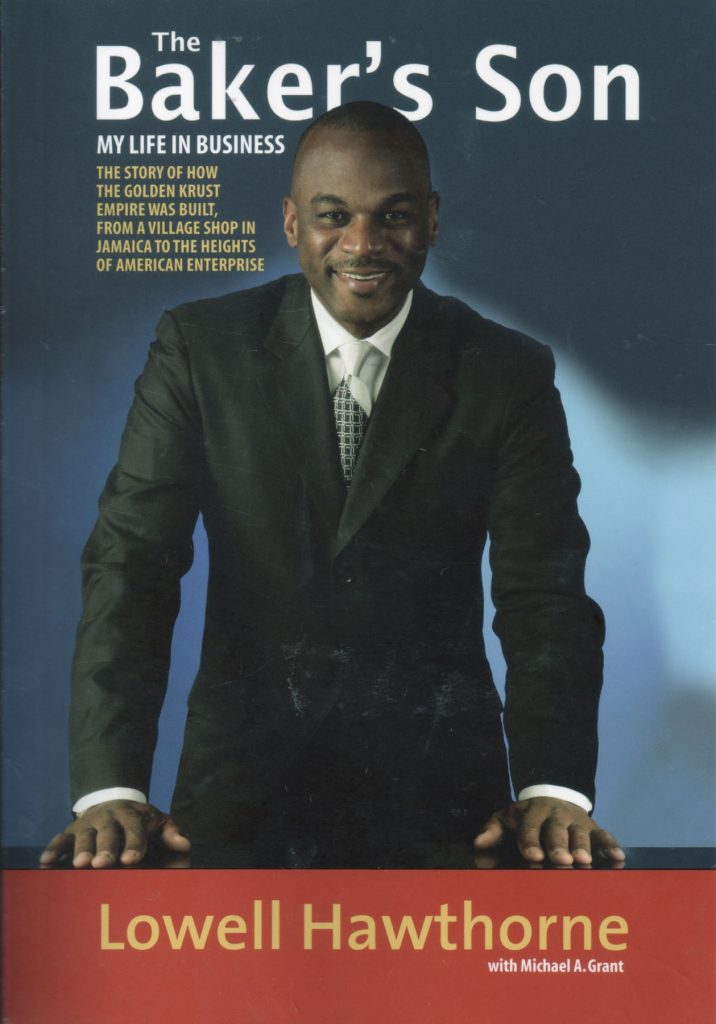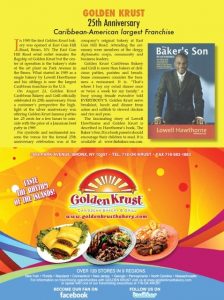
LOWELL HAWTHORNE 1960-2017

EVERYBODY’S “Caribbean” Magazine clear states that while we mourn the loss of Jamaican born Lowell Hawthorne, founder of Golden Krust, whom millions of people saw in a national TV episode of Undercover Boss, we are only prepared to say that his demise, how and where, is mind-boggling.
We wait for his family to reveal the cause of Hawthorne’s death or the police to officially explain.

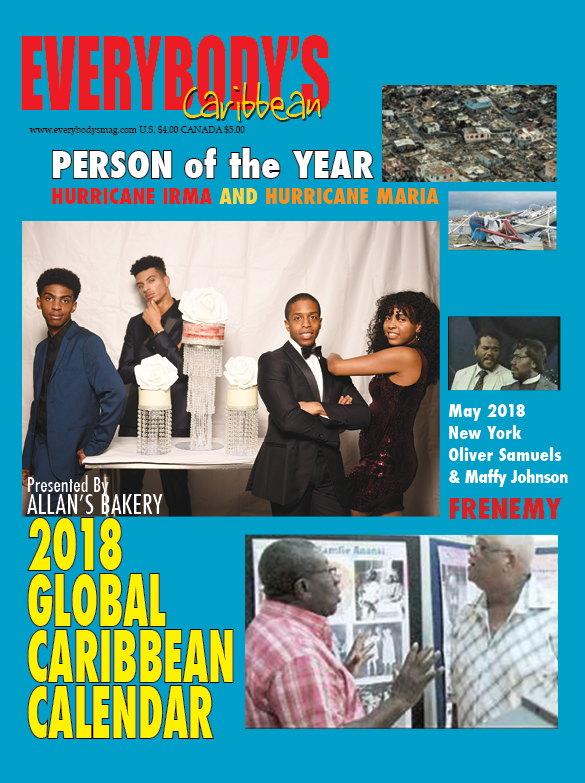
“For those of us who knew Lowell as a friend and colleague, the night of Saturday, December 2 was sleepless and holiday events attended somber. He was a born-again Christian who attended church almost every Sunday.” explains Herman Hall. “We crossed paths several times this year including his attendance at the May performance of Oliver Samuels’ play at Lehman College, Bronx. Only recently, Nov. 10, he raised approximately $100,000 at the Mavis & Ephraim Hawthorne Golden Krust Foundation dinner towards awarding scholarships. We planned to meet during the holiday season for his inclusion in a book I’m completing.

My heart goes out to his wife Lorna, children, siblings, nieces, nephews and Golden Krust family I became acquainted with over the years.”

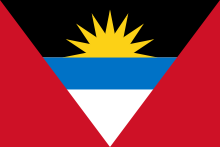
DOMINICA AND ANTIGUA & BARBUDA HURRICANE HELP

Last Saturday Dominica’s Prime Minister Roosevelt Skerrit addressed Dominicans and other Caribbean nationals at Beulah Church of the Nazarene, Brooklyn, about the devastation of Dominica by Hurricane Maria. The prime minister appealed for global help from nations to help fund constructing roads, bridges, hospitals, electrical plants and other massive undertaking that mainly governments can fund. He also asked individuals to send food, water, clothing and everyday consumer items to the approximate population of 73,000 left homeless and hungry by the wrath of Hurricane Maria.

Over the weekend Caribbean nationals in Brooklyn brought food and other supplies to Saint Lucia House, 49th @ Church Ave. The organization graciously gave its building to store supplies for shipping to Dominica.

Last Friday Prime Minister Gaston Browne met with nationals of Antigua and Barbuda in New York City. The prime minister explained to those gathered at Butler Memorial United Methodist Church in the Bronx of how all 1500 residents of Barbuda are now living in Antigua due to the massive destruction of Hurricane Irma. “I believe on a per capita basis, the extent of the destruction is unprecedented; Barbuda is totally destroyed,” he explained.

CALYPSO ROSE – GETS NATION’S HIGHEST HONOR

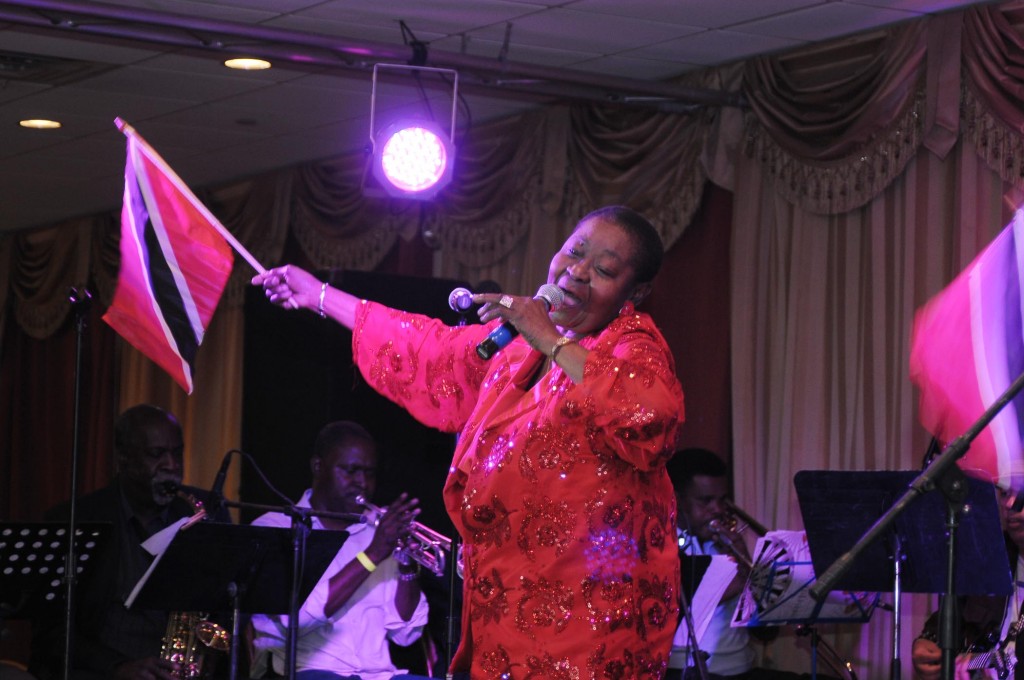
Trinidad & Tobago has awarded Sandy McCartha Lewis, Calypso Rose, the nation’s highest national honor, the Order of the Republic of Trinidad & Tobago  (ORTT). It was announced by the president of Trinidad & Tobago on Republic Day. Rose was the first woman to win the two highest prizes in calypso. She won the Road March in 1977 and the National Calypso Monarch in 1978. In 1978, EVERYBODY’S, the Caribbean-American magazine, honored Rose for her 1977 achievement. The magazine honored Rose on two more occasions.
Carib-American Experience

Book Discussion on a Pioneering Work about the Caribbean-American Experience in Brooklyn

What happens when a Brooklyn-born and bred music scholar of Trinidadian parentage decides to challenge academia and write a book her way? The result is East of Flatbush, North of Love: An Ethnography of Home, a clever and witty portrait of growing up in East Flatbush— a West Indian American neighborhood situated in the middle of Brooklyn—in the decades before gentrification. On Tuesday June 13, 6 p.m., in celebration of Caribbean American Heritage Month, Medgar Evers College, School of Professional and Community Development in collaboration with the Caribbean Awareness Committee, presents a community discussion on this highly acclaimed memoir with a distinguished panel.

Written like a novel, but ripe with historical and ethnographic information, Dr. Danielle Brown—a NYU-trained ethnomusicologist and former Syracuse University professor— presents a story that is accessible to all. Although East Flatbush plays a starring role, the book pays homage to all the West Indian neighborhoods that have made up Central Brooklyn since the 1960s.

 The author uses a wide variety of songs that form part of her cultural upbringing—from calypso to reggae to hip hop—as an educational tool to teach history and to illuminate how the legacy of colonialism and imperialism continues to impact people of color today.

About the book Roger Toussaint, former president of the Transport Workers Union, Local 100 and a member of the Caribbean Awareness Committee, notes, “As those obsessed with ruining America embrace and celebrate dystopia, it’s a pleasure to welcome Dr. Brown’s work as a subversive anthem that implicitly challenges the hallucinatory patter of our time.  By recapturing the true spirit of that contested space she hoists aloft the banner of resistance against the galloping ‘social and economic invasion’.”

Additional praise for the book comes from Dr. Lawrence Waldron, City College, CUNY, author of Gypsy in the Moonlight and Handbook of Ceramic Animal Symbols in the Ancient Lesser Antilles: “Written from the viewpoint of a Brooklyn native, this is a contemplative and amusing first-person reflection on community and identity in the West Indian-American enclave of East Flatbush before the devastating gentrifications of the past decade and a half. Neither fiction nor straight biography, the evocatively written East of Flatbush, North of Love comes with tandem subjective and objective views on life in East Flatbush, and the rigorous supporting research that makes it An Ethnography of Home, as the author calls it in her subtitle. As the reader, you are well supplied with hard facts, historical dates, definitions, a running glossary of Trinidadian and other Caribbean idioms, and bibliographic (not to mention discographic) sources, all while you marvel at Brooklyn’s Caribbean cosmopolitanism, hum the tunes to all those transcribed songs, swallow hard through a delicious recipe or a bitter tragedy, thrill to a ghost story, wipe a tear at the loss of community, or laugh at a childhood adventure.”

And Toussaint, who will be moderating the discussion, adds, “Underlying this beguiling and deceptively simple work is a profound repudiation of eurocentrism and its practice of otherizing and objectifying people… Indeed, [this book] is a must read for anyone interested in saving neighborhoods and uplifting our youth as it demonstrates how popular culture can be used as the engine for authentic self-education, activism, and change and renewal.”

This sonic trip–with Dr. Brown reading and singing her experience of life growing up as a West Indian-American in Brooklyn–on June 13, 6 p.m. @ Medgar Evers College’s Edison O. Jackson Auditorium, 1638 Bedford Avenue, Brooklyn, NY, is free and open to the public.

East of Flatbush, North of Love can be purchased through the author’s website: http://www.mypeopletellstories.com/

EXCERPT

A lot of the music that David and I listened to at home came from the radio, and Caribbean music was no different. Popular stations, like 98.7 Kiss FM, that mostly aired R&B and hip-hop dedicated some air time each week to playing Caribbean music. But perhaps the strongest radio presence for Caribbean music during my youth was WLIB 1190 AM, which specifically catered to the West Indian community. It was through this radio station that one could hear the voices of the West Indian diaspora in New York City.

Through WLIB we listened to much more than just music. In the early 2000s, I started studying the station and noting various aspects of its programming. The station aired talk shows and commercials for products and events catering to the needs of West Indians living in the city. WLIB advertised health-conscious events, such as walks for prostate cancer, as well as programs for budding entrepreneurs, like those offered by the Small Business and Development Center at Baruch College. There were frequent promotions for popular Caribbean nightclubs, like the Elite Ark, and advertisements for Travelspan, a travel agency specializing in trips to and from the West Indies. Major corporations such as Burger King, JC Penney, and First Republic Mortgage Bank sought to broaden their clientele base by advertising to a West Indian audience via the station and using (with the exception of JC Penney) persons with unequivocally West Indian accents as the speakers in their commercials.

In many ways, WLIB was crucial in crystallizing the West Indian community in New York. DJs would implicitly define the community by the music they played and the islands they would “big up” (or shout out) on the air. Musical programming played a vital role in creating bonds (or breaking them) within the West Indian community. There were times when, as a young girl, I felt that WLIB did not play enough calypso and soca, and that my heritage was being marginalized in favor of reggae and dance- hall, a sentiment that was echoed by others.

My friend Tiffany, whose father is Trinidadian and mother Honduran, once told me she used to feel slighted by WLIB’s programming:


When WLIB used to play more…specifically Jamaican music, you know…I used to be like sitting there just waiting to hear some…music from my country and it would be…one in between four reggae songs.


However, I should note that WLIB’s programming became more inclusive over the years and consisted of music not only from Jamaica, Trinidad and Tobago, and Barbados, but also St. Vincent, Grenada, and Haiti as well. WLIB even began including a program—“Indo-Caribbean Today” with Amit Parasnath—dedicated to the East Indian community, which aired every Sunday morning from eight to ten. In many ways, the station grew to reflect the changing dynamics of the West Indian community in New York City.

While the music disseminated via WLIB helped to create bonds between different members of the West Indian community in New York, there were other aspects of the station’s programming that helped to foster a sense of community. WLIB provided broadcasts to and from several West Indian countries, allowing listeners to hear live radio from their respective homelands and communicate with loved ones back “home.” Listeners who called in to the radio program were able to send greetings and messages to family members living in their country of origin. Being able to communicate with loved ones was extremely important for many listeners, as talking to loved ones via the radio offset the cost of calling home directly, which in those days had the potential to be extremely expensive.

Equally important to listeners was the ability to receive up-to-date news information from their respective home countries, as well as general news information from the West Indies. Tiffany said she liked WLIB in part because “as the day progresses, you actually get to hear international news, or news with a specifically West Indian perspective, which makes me feel a little closer to home. You know what I mean? It gives me a feeling of nostalgia.”

Together, the musical and non-musical aspects of WLIB, as well as those of several pirated stations that emerged over the years catering to the West Indian community, served to create a space where West Indians in New York could feel connected to their native lands from the privacy of their own homes. The music and information flowing from these stations contributed to altering the soundscape of New York City, bringing immigrants and first-generation Americans closer to “home.” These radio stations created an environment that allowed many West Indian immigrants to simultaneously inhabit multiple spaces. For example, West Indians who live “ah foreign” could metaphorically occupy the space of their homelands through music, despite the reality that many would never be able to return home again.

Fortunately for me, my parents had their “papers,” which meant they could leave the country freely without fear of being barred from re-entering. My father would only return to Trinidad once during my childhood, and I was almost thirty years old before we touched Trinidad soil at the same time. However, my mom made several trips to Trinidad during my youth, taking my brother and me on several of them. It was important that we learned about the land of her birth.

Two Islands Celebrating Independence

During the month of black history awareness, two Caribbean nations, Grenada and Saint Lucia, are celebrating their independence; Grenada, February 7 and Saint Lucia, February 22. Since February is Black History Month in the USA and with many other countries with large black populations now recognizing Black History Month, it is an opportunity for both neighboring nations to showcase their history.

Saint Lucia and Grenada share almost the same history. Both were occupied by the Ciboney Indians. The Arawaks then came followed by the Caribs. Europeans upon conquering both islands decimated the aboriginals. Today, there are few landmarks left by the aboriginals and few in the population of today’s Saint Lucia and Grenada can claim Carib ancestry.

Grenada and Saint Lucia were owned several times by France and England especially in the 18th century when both superpowers waged wars against each other. During the French Revolution all slaves in Saint Lucia were declared freed in 1794. Grenada at that time was in the hands of the English but on March 2-3, 1795, the French population in Grenada revolted led by Julien Fedon and he abolished slavery in Grenada.

When the British captured Saint Lucia slavery was restored and they restored slavery in Grenada when the Fedon’s Revolt was aborted.

Both islands achieved Statehood in 1967 from England allowing the right to self-govern.

On February 7, 1974, Premier Eric Gairy led Grenada into independence and Premier John Compton did the same in Saint Lucia on February 22, 1979.

Give yourself or someone an Independence Gift by ordering Herman Hall’s Belvidere Estate – Fedon’s House.  www.everbodysmag.com


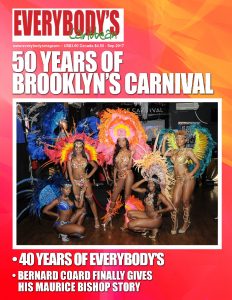
EVERYBODY’S IS 40

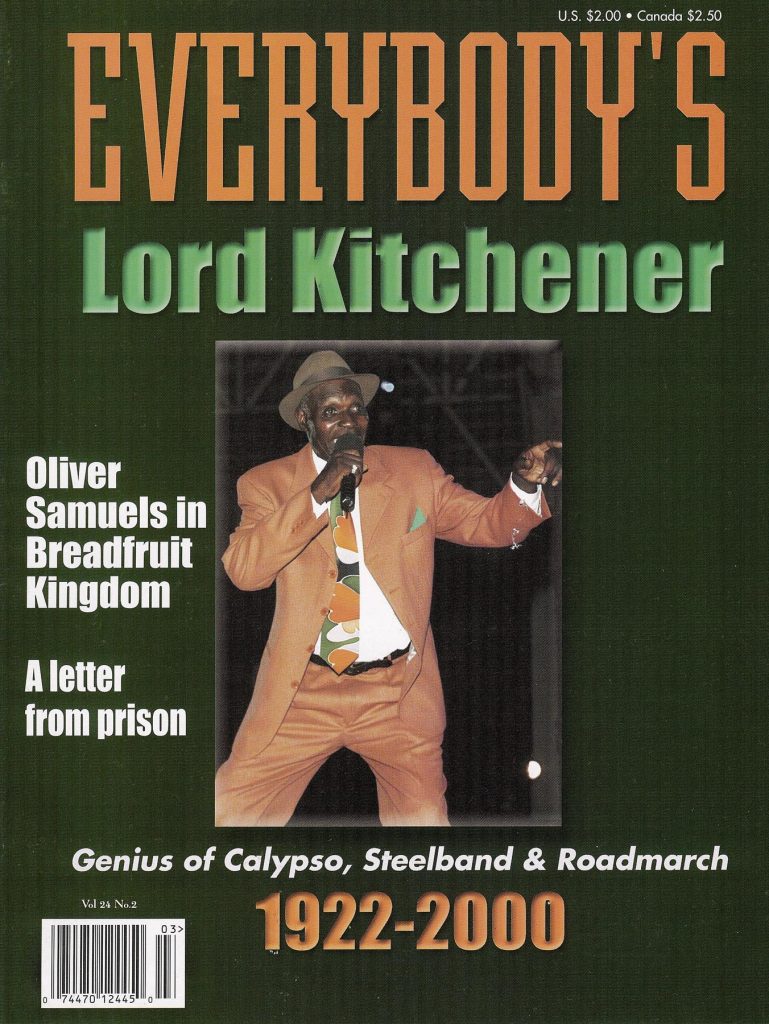
    Today, Jan. 3, 2017, begins the 40th year of EVERYBODY’S, the Caribbean-American Magazine. The first issue went on newsstands on Jan. 3, 1977. I dedicate the milestone in memory of Editor Pat Boothe, photographer Ken Chandler, distributor Richard Holder, writer Cheryl Byron and to others who departed this life. I thank writers, photographers and graphic artists who believed in me, trained here and moved on to Newsweek, Essence, Wall Street Journal, Black Enterprise, etc. I thank all our subscribers. Person on 1st issue is Cathy Jessamy of Barbados then working in NY. The other edition, our 5th and final issue of 1977, has an article by the late Winston Blake (Merritone); Photo: The late Patricia Boothe.

STRENGTH

In its heyday, EVERYBODY’S was part of the in-flight libraries of the then BWIA and Air Jamaica. American Airlines purchased 500 copies for its debut into the English speaking Caribbean market in 1977 or 1978; the Reagan White House bought 500 copies when President Ronald Reagan lobbied Congress to pass his Caribbean Business Initiative (CBI).  Over the decades, authors, students including those doing doctorates, used articles from EVERYBODY’S. And, the magazine won an international award for its coverage of the funerals of Prime Minister Eric Williams of Trinidad & Tobago and Bob Marley.


WEAKNESS

The founder/publisher of a newspaper/magazine should focus on marketing, advertising and sales. As the founder and publisher of this magazine, I am very much into writing and other editorial content instead of focusing on marketing and circulation. Yet, in a sense, the quality of our articles brought us respect encouraging readers to send us annual payments for subscriptions.  But, our lack of aggressive marketing has not brought advertisements especially from Caribbean tourism, airline, rum companies, etc., the said institutions and region we promote. Since we are a Caribbean-American magazine not slanted to a specific island-nation, most advertising decision makers prefer to spend their dollar in the island-community they identify with.

I see myself as the coach of a professional sports team who spends too much time of defense and not enough time on offense or vice versa. That’s a weakness but candid enough to reveal it.

For the record, EVERYBODY’S is owned by a black company Herman Hall Comm.  Unlike Caribbean Life, we are not Jewish owned.

My humble thanks and appreciation to subscribers, advertisers and former and present staff.

Herman Hall,

Publisher, award winning journalist, promoter/producer

Coming in 2018, my new book: Great Caribbeans Who Changed America


TOP CARIBBEAN NEWS STORIES 2016

Most watched Caribbean events of 2016

1 The death and funeral of Fidel Castro

2. Usain Bolt and other Caribbean Olympians in Rio

3. President Barack Obama visit to Cuba and US and Cuba normalizing relations

4. Hurricane Matthew destruction of Haiti

5.  Guyana and Barbados 50th anniversary of independence celebrations

6.  The U.S. Presidential elections – primaries and general election

7.   The Jamaican national election in February

8.    The Grenada referendum in late November

9.  Murders in Brooklyn Carnival in its J’Ouvert